Research Seminar
During the Winter 2023 semester, students of the Research Committee will each share insights and methodologies from their respective fields of study, enhancing academic exchange among one another.

– Speaker: Xiao Lin –
InT@UCLA Research Committee,
Undergraduate Researcher @Song Li Lab
1 What does Bioengineering encompass?
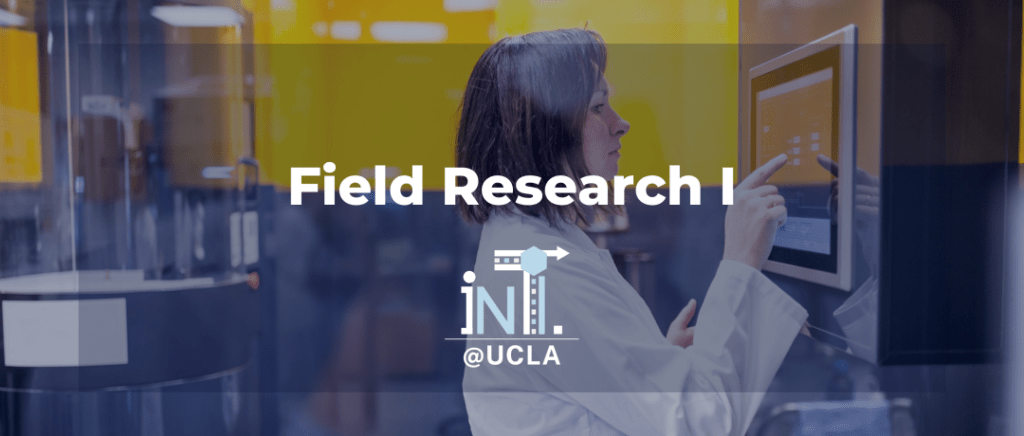
Bioengineering typically encompasses two main categories: Cell Engineering and Medical Devices.
Within the branch of Cell Engineering, scientists control differentiation through the forced expression of specific gene markers, allowing cells to be reprogrammed. To a certain extent, this approach can rejuvenate cell types that are normally non-regenerative, thus holding significant potential in cell therapy and patient-specific therapy.
In controlling cell behavior, in addition to drug administration and gene editing, the biomechanics aspect within the bioengineering field also plays a significant role. By subjecting cells to physical stimuli using various devices, changes in cell behavior and certain expressions can be induced. At the cellular level, for processes such as reprogramming and physical stimuli significantly enhance the efficiency of reprogramming fibroblasts into neuronal cells. (Y. Song et al., 2021 【2】)
Although biomedical engineering may seem remote from daily life, there are products such as nanomaterial masks that can be readily found around us.
As a discipline with a strong interdisciplinary nature, fields like the recently popular Synthetic Biology also bear the hallmarks of bioengineering.
2 Bioengineering: Recent updates?
In January 2022, the University of Maryland Medical Center transplanted a genetically modified pig heart into 57-year-old patient David Bennett. Although Bennett’s life was extended by only two months, this remains a significant attempt.【4】
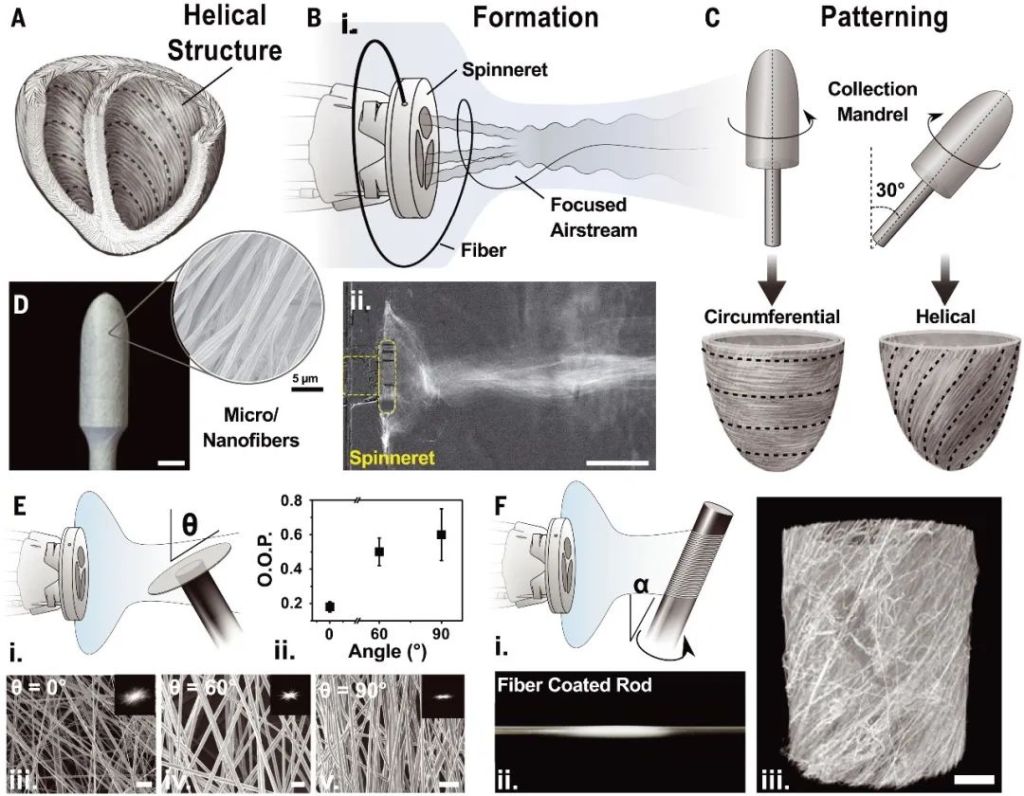
In July 2022, Kevin Kit Parker’s team at Harvard University introduced the FRJS method, which enables the rapid fabrication of micro/nano-fiber scaffolds with 3D geometric shapes and programmable arrangements. This method can reconstruct complex anatomical structures that have been unattainable with existing biomanufacturing technologies to date.【6】
Whether it’s xenotransplantation or 3D organ printing, “on-demand organ fabrication” holds immense potential in alleviating the shortage of human donor organs.【4】
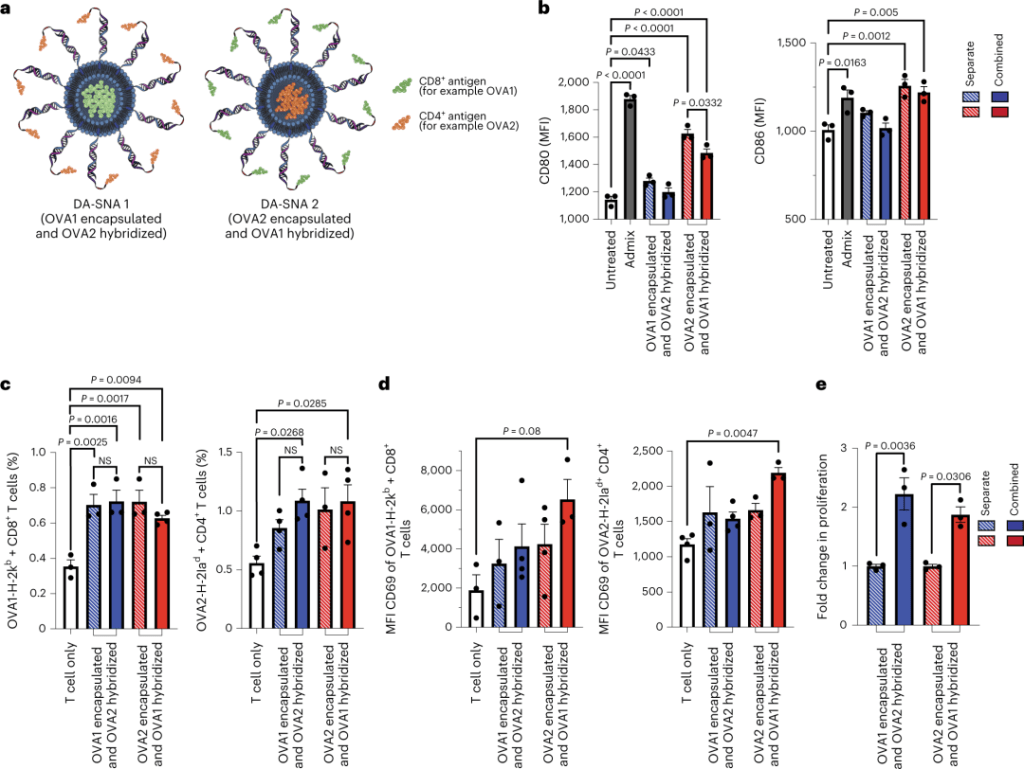
On January 30, 2023, Chad Mirkin’s team at Northwestern University developed a Dual-Antigen Spherical Nucleic Acid cancer vaccine (DA-SNA). This vaccine enhances the efficacy of cancer vaccines by altering the structural positions of antigens and adjuvants, highlighting that “in addition to vaccine components, the structure of the vaccine” is also a key factor in determining vaccine efficacy.
This vaccine lays the foundation for developing effective vaccines against almost any type of cancer and opens new pathways for us to rethink the design of vaccines for cancer and other diseases.【9】
Beyond human applications, Colossal Biosciences is attempting to revive extinct animals such as the dodo bird, mammoth, and thylacine (Tasmanian tiger), conducting research in genomics, assisted reproduction, and other fields for these species.
On January 31, 2023, the company announced the completion of a $150 million Series B funding round, bringing its total funding to $225 million. This funding round came after the launch of Colossal’s first technology spin-off, Form Bio, a software platform that entered the market with a $30 million Series A.【5】
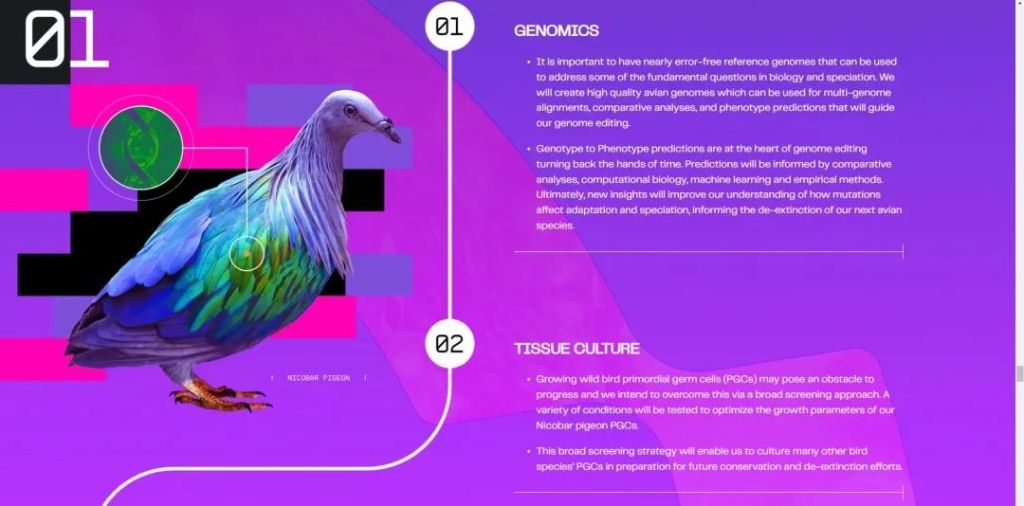
The initial steps to revive the dodo. Source:Colossal Website【8】
Behind these studies lies substantial support from bioengineering and life sciences, utilizing engineering principles to control and alter the fate of cells or to create new medical devices, thereby yielding products that have never been seen before.
3 Bioengineering related industries?
At bioengineering career fairs, companies that appear include pharmaceutical R&D companies like Amgen, Gilead Sciences, Moderna, and Xencor (focusing on Fc domains); ASP (a subsidiary of Johnson & Johnson) specializing in high-level disinfection and cleaning; sequencing giant Illumina; medical device companies such as Edward Lifesciences (focusing on structural heart disease) and BiVACOR (dedicated to the replacement of the total artificial heart); bio-pharmaceutical consulting firm Project Farma; and single-cell analysis platform Partillion Bioscience, among others.【3】
References
【1】https://li-lab.seas.ucla.edu/mechanotransduction/
【2】Song, Y., Soto, J., Chen, B. et al. Transient nuclear deformation primes epigenetic state and promotes cell reprogramming. Nat. Mater. 21, 1191–1199 (2022). https://doi.org/10.1038/s41563-022-01312-3
【3】http://bmes.seas.ucla.edu/biotech-career-fair.html
【4】https://mp.weixin.qq.com/s/bYwMRQ2pHpRhbZ0q2Bph4Q
【5】https://www.163.com/dy/article/HSIGAS5B0532PL1J.html
【6】https://www.cn-healthcare.com/articlewm/20220712/content-1398657.html
【7】Chang, Huibin, et al. “Recreating the heart’s helical structure-function relationship with focused rotary jet spinning.” Science 377.6602 (2022): 180-185.
【8】https://colossal.com/dodo/
【9】https://www.cn-healthcare.com/articlewm/20230203/content-1505430.html
【10】Teplensky, Michelle H., et al. “Multi-antigen spherical nucleic acid cancer vaccines.” Nature Biomedical Engineering (2023): 1-17. https://www.nature.com/articles/s41551-022-01000-2
Next up, Qu Songrong will present a brief overview of molecular biophysics/biochemistry
 In Transcription. @UCLA
Leave a comment